Anxiety and Depression in Youth

Anxiety and Depression in Youth - Dr Chris Taua, MHERC (Mental Health Education & Resource Centre)

Dr Chris Taua presented the two-hour seminars covering 
what triggers anxiety and depression in youth, the effects, 
strategies and techniques to help manage emotions. She 
also addressed adolescent stages and communication 
styles, and tools to improve the mental health of young 
people. 

The workshop enhance my knowledge and I learned:
  • What triggers anxiety and depression in adolescents
  • How anxiety and depression effect adolescents
  • Strategies and techniques to help adolescents manage their emotions
  • Adolescent stages and communication styles
  • Useful tools to help improve adolescent mental health
Dr Chris Taua

Dr Chris Taua is a professional educator, supervisor and 
trainer, with more than 22 years experience in the health and 
disability sector. Dr Taua is a registered nurse by profession 
with background in mental health.

Term 4 - Writing after the Holiday's.

Term 4 - Writing after the Holiday's.

Throughout the holidays I have been thinking about formulating my writing programme and making it interesting for my children.

It has been mentioned during various meetings that making students write about what they did in their holidays can be very upsetting for many kids. The holidays isn't always a time that kids look forward to. School often represents a calm, caring place and home life doesn't match up.

After considering this I have decided to begin my writing for the term by learning about ANZAC day which occured in the holidays. Not in depth at this level but we will talk about what it means and study the poppy flower. Students who want to may write about their holidays but the focus won't be on this to allow for those kids who don''t have anything they would want to share.

Later in the term we talk a lot about 'Story Telling' and Janine ask us to pick a storybook to write about for our Writing Example. We had some PD  with the RT lit one afternoon. Story Telling with RT lit Liz Swanson. I really fell in love with the 'Story Telling' idea for writing and all the children were engage in these lessons.  We started with the 'Gruffalo'.  It was just amazing how all the children enjoy our writing sessions. Our Writing Example was a huge success. 


Observation of Reading Recovery

Observation of Reading Recovery 

On my release day this week I spent time observing reading recovery (Irene Wheeler). This was a great learning experience for myself as I was able to observe valuable teaching strategies that I can apply during my guided reading sessions.

Before the children read the book with Irene (Reading recovery teacher) she made sure she went through each page and talked about what was happening on each page. I think this could be good for my priority students as they need the chance to engage with the pictures as they don't have a lot of reading strategies to help with their decoding. It gives teachers the chance to let the child know of any tricky words that they may come across in the text.

Irene was doing the running records to check where the kids are at. I noticed after the running record Irene went back through the text and picked up on a few of the words that the children had muddled up and supported them to use strategies to successfully decode them.

When the child got stuck on a word Irene didn't just tell him the word. She instead helped him to use strategies - such as comparing the word to another word they already know and breaking the words into chunks.

Irene also told me that during the session the child also have a chance to complete a piece of writing. The teacher can really focuses on correct letter formation with the children and reinforces this whilst they are writing. There are many bad habits they have to break when they are allowed to form the letter incorrectly every time they write. This is something I would like to focus on more during my writing sessions.

Irene advise me that the kids only take books home which they have read in the class to ensure they understand the story.

Observing Irene was very helpful because at my level children are learning many of these strategies and it was great to gain some different ideas to use whilst I am teaching.

Carol Dweck Revisits Growth Mindset

Carol Dweck Revisits the 'Growth Mindset'


For many years, I secretly worked on my research. I say “secretly” because, once upon a time, researchers simply published their research in professional journals—and there it stayed.
However, my colleagues and I learned things we thought people needed to know. We found that students’ mindsets—how they perceive their abilities—played a key role in their motivation and achievement, and we found that if we changed students’ mindsets, we could boost their achievement. More precisely, students who believed their intelligence could be developed (a growth mindset) outperformed those who believed their intelligence was fixed (a fixed mindset). And when students learned through a structured program that they could “grow their brains” and increase their intellectual abilities, they did better. Finally, we found that having children focus on the process that leads to learning (like hard work or trying new strategies) could foster a growth mindset and its benefits.
So a few years back, I published my book Mindset: The New Psychology of Success to share these discoveries with educators. And many educators have applied the mindset principles in spectacular ways with tremendously gratifying results.

—Jori Bolton for Education Week
This is wonderful, and the good word continues to spread. But as we’ve watched the growth mindset become more popular, we’ve become much wiser about how to implement it. This learning—the common pitfalls, the misunderstandings, and what to do about them—is what I’d like to share with you, so that we can maximize the benefits for our students.
A growth mindset isn’t just about effort.Perhaps the most common misconception is simply equating the growth mindset with effort. Certainly, effort is key for students’ achievement, but it’s not the only thing. Students need to try new strategies and seek input from others when they’re stuck. They need this repertoire of approaches—not just sheer effort—to learn and improve.
We also need to remember that effort is a means to an end to the goal of learning and improving. Too often nowadays, praise is given to students who are putting forth effort, but not learning, in order to make them feel good in the moment: “Great effort! You tried your best!” It’s good that the students tried, but it’s not good that they’re not learning. The growth-mindset approach helps children feel good in the short and long terms, by helping them thrive on challenges and setbacks on their way to learning. When they’re stuck, teachers can appreciate their work so far, but add: “Let’s talk about what you’ve tried, and what you can try next.”
Recently, someone asked what keeps me up at night. It’s the fear that the mindset concepts, which grew up to counter the failed self-esteem movement, will be used to perpetuate that movement. In other words, if you want to make students feel good, even if they’re not learning, just praise their effort! Want to hide learning gaps from them? Just tell them, “Everyone is smart!” The growth mindset was intended to help close achievement gaps, not hide them. It is about telling the truth about a student’s current achievement and then, together, doing something about it, helping him or her become smarter.
I also fear that the mindset work is sometimes used to justify why some students aren’t learning: “Oh, he has a fixed mindset.” We used to blame the child’s environment or ability.
Must it always come back to finding a reason why some children just can’t learn, as opposed to finding a way to help them learn? Teachers who understand the growth mindset do everything in their power to unlock that learning.
A few years ago, my colleague in Australia, Susan Mackie, detected an outbreak of what she called “false growth mindset.” She was seeing educators who claimed to have a growth mindset, but whose words and actions didn’t reflect it. At first, I was skeptical. But before long, I saw it, too, and I understood why.
In many quarters, a growth mindset had become the right thing to have, the right way to think. It was as though educators were faced with a choice: Are you an enlightened person who fosters students’ well-being? Or are you an unenlightened person, with a fixed mindset, who undermines them? So, of course, many claimed the growth-mindset identity. But the path to a growth mindset is a journey, not a proclamation.
Let’s look at what happens when teachers, or parents, claim a growth mindset, but don’t follow through. In recent research, Kathy Liu Sun found that there were many math teachers who endorsed a growth mindset and even said the words “growth mindset” in their middle school math classes, but did not follow through in their classroom practices. In these cases, their students tended to endorse more of a fixed mindset about their math ability. My advisee and research collaborator Kyla Haimovitz and I are finding many parents who endorse a growth mindset, but react to their children’s mistakes as though they are problematic or harmful, rather than helpful. In these cases, their children develop more of a fixed mindset about their intelligence.
How can we help educators adopt a deeper, true growth mindset, one that will show in their classroom practices? You may be surprised by my answer: Let’s legitimize the fixed mindset. Let’s acknowledge that (1) we’re all a mixture of fixed and growth mindsets, (2) we will probably always be, and (3) if we want to move closer to a growth mindset in our thoughts and practices, we need to stay in touch with our fixed-mindset thoughts and deeds.
If we “ban” the fixed mindset, we will surely create false growth-mindsets. (By the way, I also fear that if we use mindset measures for accountability, we will create false growth mindsets on an unprecedented scale.) But if we watch carefully for our fixed-mindset triggers, we can begin the true journey to a growth mindset.
What are your triggers?
“The growth mindset was intended to help close achievement gaps, not hide them.”
Watch for a fixed-mindset reaction when you face challenges. Do you feel overly anxious, or does a voice in your head warn you away? Watch for it when you face a setback in your teaching, or when students aren’t listening or learning. Do you feel incompetent or defeated? Do you look for an excuse? Watch to see whether criticism brings out your fixed mindset. Do you become defensive, angry, or crushed instead of interested in learning from the feedback? Watch what happens when you see an educator who’s better than you at something you value. Do you feel envious and threatened, or do you feel eager to learn? Accept those thoughts and feelings and work with and through them. And keep working with and through them.
My colleagues and I are taking a growth-mindset stance toward our message to educators. Maybe we originally put too much emphasis on sheer effort. Maybe we made the development of a growth mindset sound too easy. Maybe we talked too much about people having one mindset or the other, rather than portraying people as mixtures. We are on a growth-mindset journey, too.
Vol. 35, Issue 05, Pages 20, 24
Published in Print: September 23, 2015, as Growth Mindset, Revisited
RELATED OPINION

Profesional Reading

Professional Reading Term 3

Angela Watson - 6 ways to teach growth mindset from day one of school 


Once children have a growth mindset, they can learn anything.
Because a growth mindset is a critical element of success in school, teaching about it from the very first day is very important.

Angela Watson recommend the following 6 ways to do that:
1. As you teach classroom routines, explain how they are designed to benefit kids’ brains.
For example, when you teach students how to do collaborative learning activities, tell them that talking about what they’ve learned helps them own and process the information better, and grows more dendrites. When you teach water fountain procedures, let kids know that their brains need hydration in order to function well, and remind students of the benefits of drinking water.
2. When kids don’t follow the procedures you’ve taught, respond in casual ways that help them rebound.
When we overreact to mistakes or get frustrated with students’ inability to internalize classroom routines right away, we undermine our message that learning is a process and failure is a natural part of that process. Make it your goal to respond to students’ mistakes with patience and nonchalance. Remind students: Each time you practice this routine, your brain is getting stronger, and it will be easier for you to do it the next time. When kids forget what to do, let your tone and facial expression communicate: Mistakes don’t upset me. We can fix this, and fixing it together will make us both smarter.
3. Get student input on creating helpful classroom displays that reinforce learning.
You don’t have to start the school year with a perfectly decorated classroom–leave space for students to create and suggest displays! During the first few weeks of school, find out what students would like to have as a reference in the classroom to help them maintain a growth mindset and take ownership of their learning. Would students like to make an anchor chart with strategies they can use when they get stuck? Do they want to display growth mindset vocabulary words and definitions so they can try to use them in their conversations? Or maybe they’d like to display some of their reflections about or strategies for learning to help other kids in the class?
4.  Use specific feedback and helpful vocabulary that guides students to identify how they achieved success.
We give tons of positive feedback and praise as students first start learning the expectations for the new grade level, but we don’t always point out the character traits students demonstrated in order to experience that success. Integrate growth mindset vocabulary into your daily routines, and continually point out when students demonstrate those qualities. You might say, “This was hard for you, but you persevered, and now you’ve almost got it!” or “You had a setback when your strategy didn’t work, but you found resources to help you. You showed a lot of resilience, and it paid off!” You may even want to end the school day on a daily basis by having students turn and share ways they have shown grit that day (or struggled to show grit, and brainstorm strategies for doing better tomorrow.)
5. Model growth mindset so kids can see it in action.
Show students how to respond constructively to setbacks and failures. Let kids see how you brainstorm solutions and different strategies to try when a piece of technology doesn’t work, you can’t find something you need, or a surprise fire drill prevents kids from finishing a task. Allow students see that you are willing to learn and try new things, even when they are hard for you, and be honest when you try things in the classroom that are out of your comfort zone. Let students see that learning new things, taking on challenges, and rebounding after making mistakes are all a natural part of life and help train your brain to grow stronger over time.
6. Start formally teaching kids about growth mindset / neuroplasticity through books, apps, and other resources.
Two of the best children’s books on growth mindset are Your Fantastic Elastic Brain by Dr. JoAnn Deak and Making a Splash: A Growth Mindset Children’s Book by Carol E. Reiley. There is a $4.99 app for “Your Fantastic Elastic Brain” which includes an eBook version of the book along with interactive features. Or, you might want to try the $2.99 Brain Jump app for iPad and iPhone. I also like the free online brain songs provided by the University of Washington.


Class management - Bucket filler System

Class management - Bucket filler System

Have You Filled a Bucket Today?

I am using the book - Have you filled a Bucket today? - to kick off my programme.  It is a guide to daily happiness for kids.  The Bucket filler system encourages positive behavior as children see how rewarding it is to express daily kindness, appreciation, and love. 
This book explains to children that we all carry an invisible bucket in which we keep our feelings about ourselves. When our buckets are full, we are happy; when they are empty, we are sad. 
It is important to know that we can fill our own bucket and so can others. We fill buckets by saying and doing nice things to the people around us. 


THIS IS A GREAT BOOK FOR KIDS IN TODAYS WORLD KIDS NEED AN UPLIFTING A TRUE WAY OF LIVING. THIS TELLS THEM THAT BEING A NICE PERSON IS THE WAY TO GO. BEING A TEACHER OF YOUNG CHILDREN, I REALLY LIKE THE MESSAGE BEING SENT IN THIS BOOK.

This heartwarming book encourages positive behavior by using the concept of an invisible bucket to show children how easy and rewarding it is to express kindness, appreciation and love by "filling someones bucket”. I am using the book as well as a visible bucket system with 'bucket filler beads' as reward to encourage children to do the right thing. I am also using bucket filler beads to reward children doing the right thing. They add these beads in their buckets until their bucket is full to. 


How Full Is Your Bucket? For Kids
https://www.youtube.com/watch?v=A5R6-2m_qHk


I am using the book as well as a visible bucket system with 'Bucket Filler Beads' as reward to encourage children to do the right thing. They add the beads in their buckets until their bucket is full and then they are allowed to pick a prize out of our 'Mystery Prize Box'.

Cultural Wall and map in classroom


Cultural Wall and map in classroom

In Term 1, Room 4 had an interesting Cultural discussion. Each child's culture, country, flag and beliefs were discussed and together we created a visual representation of our class. We added our flags and map out our country of origin.


Class management - Bucket filler System

Class management - Bucket filler System

Have You Filled a Bucket Today?

I am using the book - Have you filled a Bucket today? - to kick off my programme.  It is a guide to daily happiness for kids.  The Bucket filler system encourages positive behavior as children see how rewarding it is to express daily kindness, appreciation, and love. 
This book explains to children that we all carry an invisible bucket in which we keep our feelings about ourselves. When our buckets are full, we are happy; when they are empty, we are sad. 
It is important to know that we can fill our own bucket and so can others. We fill buckets by saying and doing nice things to the people around us. 


This is a great book for kids. In todays world kids need an uplifting and true way of living.  This tells them that being a nice person is the way to go.  Being a teacher of young children, I really like the message being sent in this book.


This heartwarming book encourages positive behavior by using the concept of an invisible bucket to show children how easy and rewarding it is to express kindness, appreciation and love by "filling someones bucket”. I am using the book as well as a visible bucket system with 'bucket filler beads' as reward to encourage children to do the right thing. I am also using bucket filler beads to reward children doing the right thing. They add these beads in their buckets until their bucket is full to 


How Full Is Your Bucket? For Kids

https://www.youtube.com/watch?v=A5R6-2m_qHk


I am using the book as well as a visible bucket system with 'bucket filler beads' as reward to encourage children to do the right thing. They add the beads in their buckets until their bucket is full and then they are allowed to pick a prize out of our 'Mystery Prize Box'.

Class management - Calming Down Corner

'Calming Down Corner'

RTLB working with a group of behaviour boys and setting up a 'Calming Down Corner'.


Class Management - Growth Mindset

Growth Mindset
Growth Mindset developed by psychologist Carol Dweck. Many schools and educators have started using her theories.  A mindset is a self-perception or ‘self-theory’ that people hold about themselves. A fixed mindset - the belief that they are either ‘smart’ or ‘dumb’. A growth mindset people believe that their most basic abilities can be developed through dedication and hard work.


Family Event - Book Night

“Book Night

Help organised a family evening “Book Night”.


Māori beliefs, language and culture in Room 4


Māori beliefs, language and culture in Room 4
I demonstrates integrity, sincerity and respect towards Māori beliefs, language and culture in my practise. We start every morning with Māori sayings and introduce a new one every week /  second week.  Learning songs, names of animals and greetings.


Using Spirals of Inquiry to transform practice and raise literacy levels for boys


2017 ALL Writing Intervention

Using Inquiry to transform practice and raise literacy levels for 4 students in Room 4.  I am using the following link and information as a guidance to my Inquiry.


Using Spirals of Inquiry to transform practice and raise literacy levels for boys

Fendalton Open Air School teachers collected and analysed a range of data to enhance their writing programme and engage learners. 

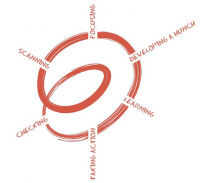
Focusing the inquiry

Spirals of inquiry
Timperly, Kaser and Halbert (2014)
The six parts of the spiral of inquiry
Teachers, Sue Gordon and Judy Harford from Fendalton Open Air School used Halbert and Kaser’s Spirals of Inquiry (2013) to transform their teacher practices and raise literacy levels for boys in their classrooms, while participating in the Future Focus Inquiry programme.
A fundamental part of this process was:
  • improving data collection
  • developing student agency
  • determining what quality feedback looks like
  • collaborating with parents, teachers, and peers as critical friends.
Judy and Sue collected relevant information from the boys and their families, alongside asTTle data and anecdotal evidence, as a part of the scanning and focussing phase of the Spirals of Inquiry framework. This included:
  • using learner maps to identify the boys’ strengths, interests, experiences, and knowledge
  • having learner consultations to assess the boys’ attitudes and behaviours towards their writing and learning
  • using both of the strategies above to explore the impact of whānau engagement in the writing process.
This information was examined to determine the role teachers, parents, and peers could play to support the development of the boys’ writing potential. Judy and Sue realised:
1. Discussion is an important part of the writing process
During the learning consultations, the boys revealed that if given the opportunity to talk about their writing, they could articulate ideas, identify difficulties, and explore their learning needs. For Judy and Sue, this emphasised the importance of processing time and giving feedback in writing. So they established "talk-time" for all students in their writing programme. 
2. Collecting different types of data is crucial
Learner maps and consultations revealed “hidden data” not collected from asTTle or writing samples. They showed, the need for boys to talk about ideas and receive feedback throughout the writing process.
“Gathering writing samples is not enough evidence. Give learners a voice. Ask them about their learning, but be sure to wait and listen to the answer. If you really want to support your learners listen without prompting or filling in the gaps.”
Teacher reflection
3. Including whānau in the writing process is important
The learner consultations highlighted the need to inform and include whānau to support the boys’ with developing their ideas, structure, and language when writing. When asked about the feedback their parents gave them, many boys replied, “spelling” or “how neat my writing is”. Consequently a number of the boys stated these as important personal goals to improve their writing, rather than focusing on the content.

Using digital technologies

Judy and Sue utilised Google Apps for Education due to it’s inbuilt features such as the comments, dictionary, thesaurus, and research capability. They hoped the platform would raise levels of engagement, allow a wider audience for the boys’ writing, and improve the quality of content.
The boys engagement and motivation immediately improved using the Google platform. However, there was no development in the quality of their writing content. Judy and Sue realised they would needed to revisit their inquiry, and their approach, to improve learning outcomes.
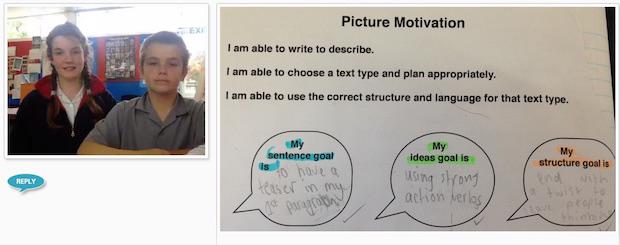
By reviewing the comments within the boys’ Google documents, Judy and Sue identified the boys weren’t making the connection between their goals and steps for improvement. Judy and Sue concluded the boys needed more explicit instruction to understand their writing goals.
Together, the boys and teachers explored the Kid-speak writing progressions, which support learners in self-regulating their learning. The boys used the writing progressions to set individualised goals, taking responsibility for their own progress through self-monitoring and self-direction. This strategy gave the boys a deeper understanding of how to improve the quality of their writing. Judy and Sue explored processes for giving and receiving explicit synchronous and asynchronous goal-based feedback. They regularly addressed the boys writing goals and modelled effective feedback on the writing based on each student's goals.

Developing partnerships and relationships to support boys learning

As part of student led conferences the boys were asked to model guidelines for providing quality feedback to their parents. They introduced the Movenote app, which allows students to record a video alongside documents or pictures. The boys used this tool to teach others, including their whānau, aboutgoal setting and giving quality feedback.

Guidelines for parents providing feedback
Student Movenotes

Outcomes

Target learners’ achievement improved in all key skills assessed in the e-asTTle rubric, progressing from less than 2B to ranging from 2A–4B. Improvement was also evidenced by the boys:
  • greater levels of focus and concentration
  • developing more comprehensive personal writing goals
  • self-regulating writing behaviours
  • expressing a greater ownership of their learning
  • taking risks with vocabulary and ideas
  • using spellcheck confidently to identify correct spelling options
  • seeking explicit feedback
  • being enthusiastic about writing with increased motivation to continue at home
  • gaining confidence as leaders and teachers, using Google Docs and Movenote to instruct whānau on the writing process.
Whānau have expressed pride in the progress their children have made and the improved confidence and ability in their boys’ writing.

Summary

The teachers consistently re-visited the Spirals of Inquiry framework to check, evaluate, and monitor the effectiveness of their approach.
“Teaching inquiry questions change and grow and go off on tangents or circle back on themselves depending on the data and what you do with it. It’s about us as teachers...it’s all about improving your practise.”
Teacher reflection
Sue and Judy realised the value of getting support for their inquiry. They sought and found further evidence, knowledge, and expertise from a range of sources, including:
By engaging in a genuine inquiry process, Sue and Judy were able to analyse and deconstruct their teaching practice in a meaningful way. They gathered student voice and incorporated whānau involvement. They were innovative in their approach to addressing their learners’ needs and used digital technologies to support this. It was not the digital technology alone that improved the boys’ writing, but the way it was used to develop partnerships to support their learning. Utilising the Spirals of Inquiry framework, valuing student voice, and agency, supported by the use of e-learning tools, was key to creating authentic and positive change in this approach.